AI Number Plate Recognition: The Complete Guide
Digital Marketing Manager with a deep fascination for the intersection of marketing technology and artificial intelligence. I'm currently on a learning journey exploring Large Language Models (LLMs) and their practical applications in automating and optimizing marketing workflows. I write about my discoveries in AI, digital marketing strategies in the age of AI, and how these powerful tools are shaping the future of the web.
Have you ever wondered how security cameras can read license plates on moving cars? This technology is called AI number plate recognition. It uses artificial intelligence to automatically detect and read vehicle license plates. This guide will explain everything about this amazing technology in simple terms.
What Is AI Number Plate Recognition?
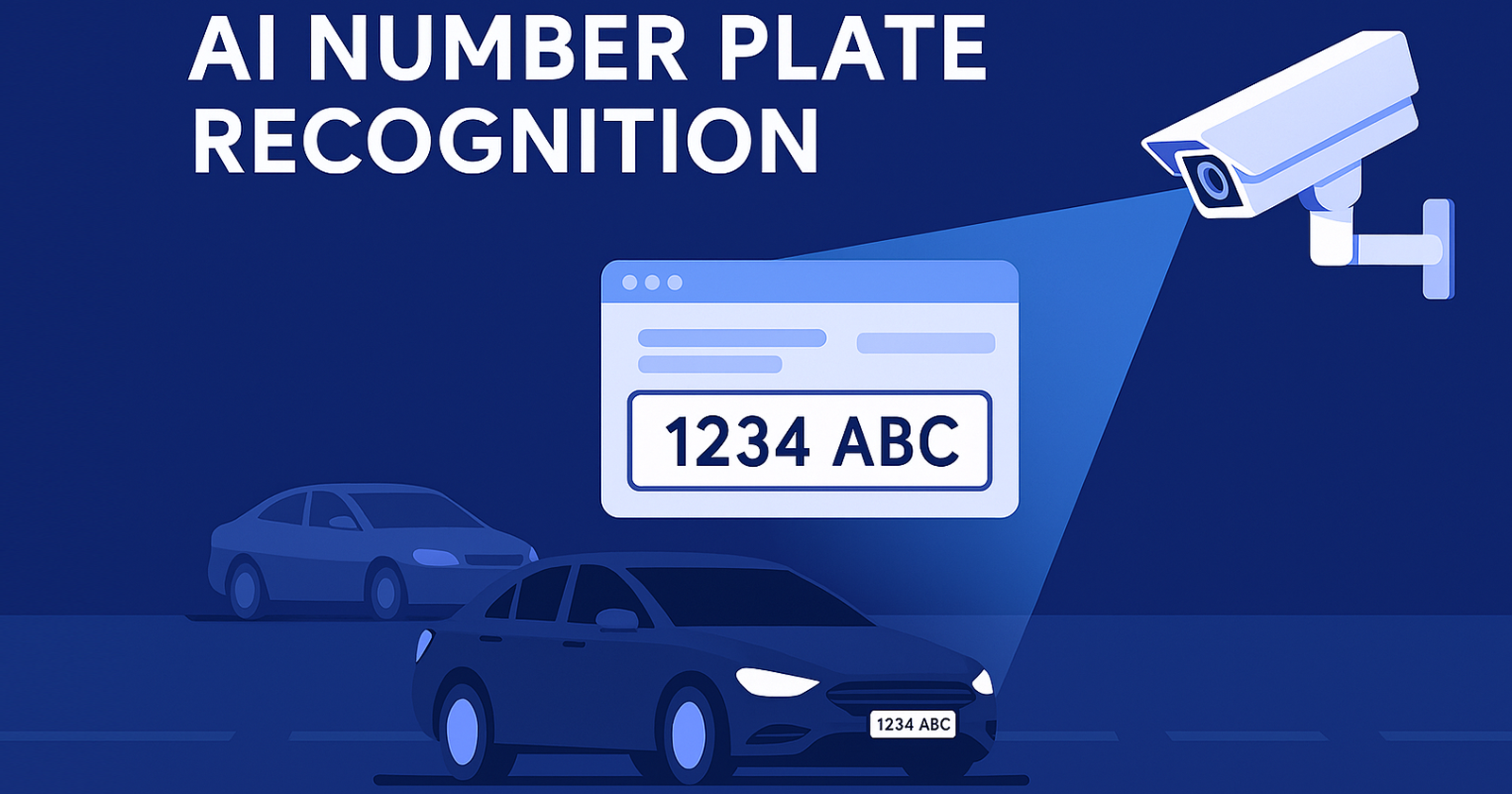
AI number plate recognition is a technology that uses artificial intelligence to automatically detect, read, and process vehicle license plates from images or video footage. It combines computer vision and machine learning to identify characters on license plates with high accuracy, even in challenging conditions like poor lighting or bad weather.
Automatic license plate recognition system technology has come a long way. Early systems needed perfect conditions to work well. Today's AI-powered systems can read plates in rain, fog, or at night. They can handle different angles and speeds too. This makes them much more useful for real-world applications.
These systems work by first locating the license plate in an image. Then they separate the plate from the rest of the vehicle. Finally, they read the characters on the plate. The AI learns from thousands of examples to get better at this task over time.
How Does AI Number Plate Recognition Work?
The process of AI number plate recognition involves several steps:
Image Capture: A camera takes a picture of a vehicle
Plate Detection: The AI finds the license plate in the image
Character Segmentation: The AI separates individual characters on the plate
Character Recognition: The AI identifies each character
Data Output: The system outputs the license plate number
Modern license plate recognition software uses deep learning models. These models are trained on huge datasets of license plate images. The more data they're trained on, the better they perform. Companies like Labellerr AI provide tools to create high-quality training data for these systems.
Why Use AI Number Plate Recognition?
AI number plate recognition offers significant advantages over manual methods or older automated systems. It provides higher accuracy, works in various conditions, processes data instantly, reduces human error, and can handle large volumes of vehicles efficiently. These benefits make it invaluable for security, traffic management, and automated parking systems.
Traditional methods of reading license plates required people to look at footage or images. This was slow and prone to mistakes. Vehicle recognition AI solves these problems. It can process thousands of plates per hour with minimal errors.
Here are the main benefits of using AI for license plate recognition:
High Accuracy: AI systems can achieve over 95% accuracy
Speed: Process vehicles in real-time without slowing traffic
24/7 Operation: Work continuously without breaks
Cost Savings: Reduce need for manual monitoring
Data Integration: Easily connect with other systems
Applications of AI Number Plate Recognition
Security and Law Enforcement
Police and security agencies use automatic license plate recognition system technology to find stolen vehicles or identify cars linked to crimes. According to the National Institute of Justice, these systems help solve crimes faster and improve public safety.
Parking Management
Many parking facilities now use license plate recognition software for automated entry and exit. The system records when a car enters and calculates fees automatically when it leaves. This eliminates the need for tickets and makes parking more convenient.
Toll Collection
Highways and bridges use vehicle recognition software for electronic toll collection. Cars don't need to stop - the system reads their plates and bills the registered owners. The Federal Highway Administration reports this technology reduces traffic congestion and improves travel time.
Traffic Monitoring
Transportation departments use AI number plate recognition to study traffic patterns. They can track how many vehicles use certain roads at different times. This information helps in planning better transportation systems.
Challenges in AI Number Plate Recognition
Despite its advantages, AI number plate recognition faces several challenges:
Poor Image Quality: Blurry or dark images make recognition difficult
Different Plate Designs: Various countries and states have different plate styles
Weather Conditions: Rain, snow, or fog can obscure plates
Vehicle Speed: Fast-moving vehicles are harder to capture clearly
Occlusions: Dirt, bike racks, or other objects blocking the plate
Advanced vehicle recognition AI systems like those powered by Labellerr AI use sophisticated algorithms to overcome these challenges. They're trained on diverse datasets that include many different conditions.
Improving AI Number Plate Recognition Accuracy
To improve AI number plate recognition accuracy, use high-quality training data with diverse examples, optimize camera placement and settings, implement image preprocessing techniques, use robust character recognition models, and continuously test and refine the system with real-world data. Proper data annotation is crucial for training effective models.
High-quality data is the most important factor for accurate license plate recognition software. The AI needs to see thousands of examples of license plates in different conditions. This helps it learn to recognize plates in various real-world situations.
According to research from the National Institute of Standards and Technology, proper training data significantly improves recognition system performance. Companies like Labellerr AI specialize in creating this high-quality training data.
The Future of AI Number Plate Recognition
The future of AI number plate recognition looks exciting. Here are some developments we can expect:
Better Accuracy: Systems will work in even more challenging conditions
Faster Processing: Real-time recognition on edge devices
Integration with Other Systems: Connecting with smart city infrastructure
Predictive Capabilities: Anticipating traffic patterns and security risks
Global Standardization: Systems that work across different countries
As vehicle recognition AI continues to improve, we'll see more applications in daily life. From smarter parking to enhanced security, this technology will make our cities more efficient and safer.
FAQs About AI Number Plate Recognition
How accurate is AI number plate recognition?
Modern AI number plate recognition systems can achieve accuracy rates of 95-99% under good conditions. Accuracy depends on factors like image quality, camera placement, lighting, and the specific algorithms used. Systems trained with high-quality data from providers like Labellerr AI tend to perform better.
Can AI read license plates from any angle?
Advanced automatic license plate recognition system technology can read plates from various angles, though performance decreases as the angle becomes more extreme. Systems trained on diverse datasets with multiple angles perform better. For best results, cameras should be positioned to capture plates as directly as possible.
Is AI number plate recognition legal?
The legality of AI number plate recognition varies by jurisdiction. In most places, it's legal for purposes like traffic management, parking, and law enforcement. However, privacy regulations may restrict how the data is stored and used. Organizations should consult local laws before implementing these systems.
What makes Labellerr AI different for license plate recognition?
Labellerr AI provides specialized tools for creating high-quality training data for AI number plate recognition systems. Their platform helps annotate license plate images accurately and efficiently, which is crucial for building reliable vehicle recognition AI models.
Key Benefits of Using Labellerr AI for License Plate Recognition
Labellerr AI offers several advantages for developing license plate recognition software:
High-quality data annotation tools
Support for multiple license plate formats
Ability to handle challenging conditions
Fast processing times
Scalable solutions for large datasets
Whether you're building a simple license plate recognition API or a complex automatic license plate recognition system, Labellerr AI provides the tools you need to train accurate models.
Getting Started with AI Number Plate Recognition
If you want to implement AI number plate recognition in your organization, follow these steps:
Define your specific use case and requirements
Choose the right camera and hardware setup
Collect diverse training data
Use Labellerr AI to annotate your data accurately
Train your vehicle recognition AI model
Test and refine your system
Deploy and monitor performance
Remember that successful AI number plate recognition implementation depends on quality data. Labellerr AI can help you create the annotated datasets needed for training accurate models.
Ready to implement AI number plate recognition in your organization? Learn how Labellerr AI can help you build accurate vehicle recognition systems by visiting our comprehensive guide on automated license plate recognition.